PERCEPTION CREATION

An interactive edition on how the brain builds the world you live in.

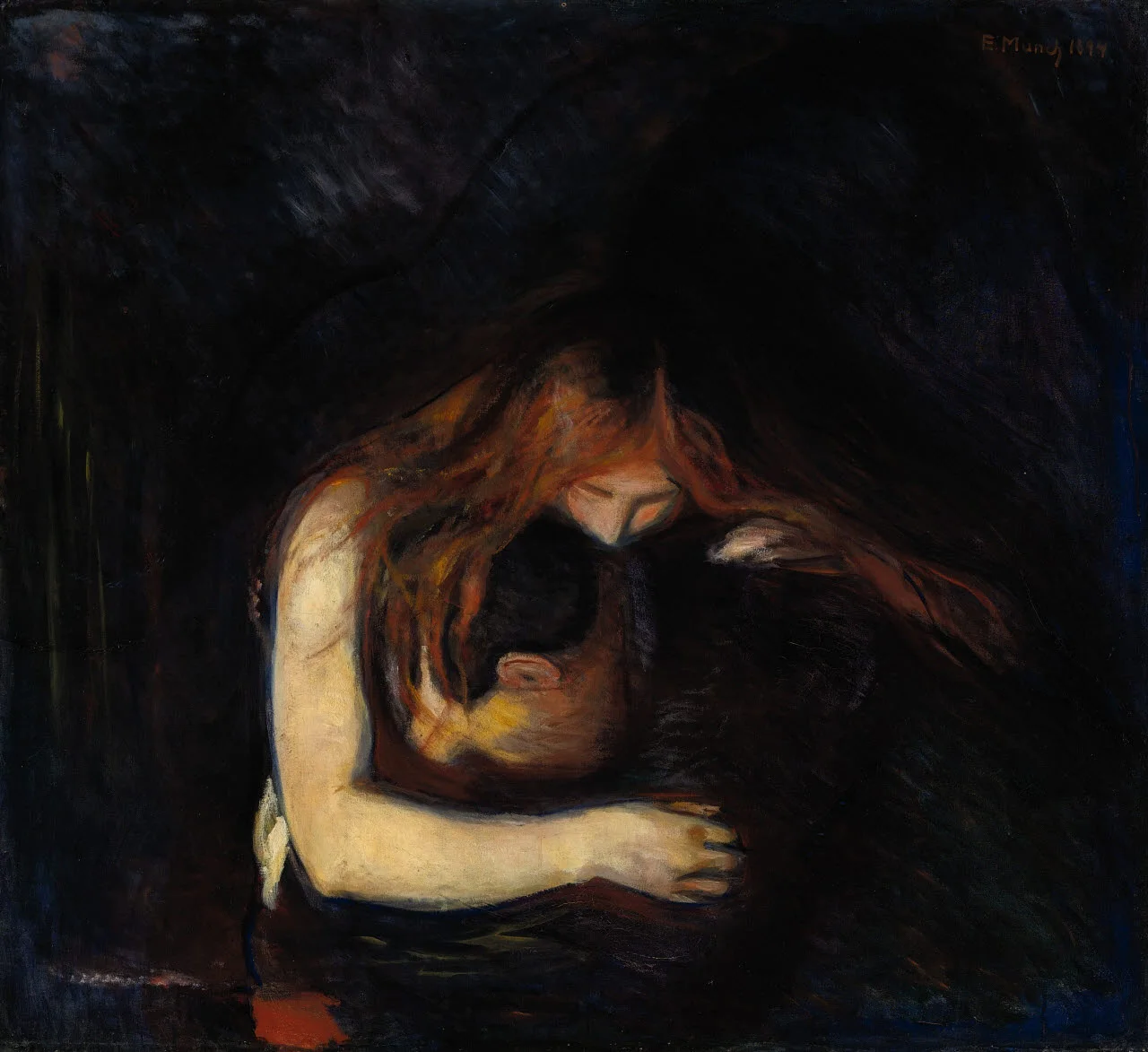
Edvard Munch, 'Vampire' (1894): a woman's red hair falls over a man in deep darkness.
Edvard Munch, Vampire, 1894

Light and colour tend to take on a praeternatural quality when seen in the midst of environing darkness. Such work stands out, as though floodlit, against a background of impenetrable night. Hence the visionary intensity, the strange transporting power of these extraordinary works.

— Aldous Huxley, Writer & Philosopher
Heaven and Hell

Move to cast light

An impossible triangle.

Three straight bars.
Three right angles.

Impossible only from where you’re standing.

Drag to look around it

Contents

  1. Introduction
  2. Part 1 The Sensory World
  3. Part 2 The Psychology of Perception
  4. Conclusion

Introduction

Welcome to
Perception
Creation

The human life is spent in a state of almost constant sensory bombardment. Every waking hour is spent with the windows to the mind open, taking in the physical world. It is simultaneously beautiful and disgusting, ephemeral and enduring, different and the same. It is often dangerous, even with the right perceptual tools.

Above all else, it is rich with information. As we navigate through what we call ‘reality’, our brain’s perpetual task is the challenge of putting all of this information in order. To select from, organise, interpret and act based on an endless stream of sensory signals: the sights, sounds, smells, tastes and physical sensations of whichever environment we occupy at any given time.

Maintaining a coherent and consistent perception despite this relentless cacophony of sensory stimulation is vital to our survival. The human brain’s remarkable capacity to perceive allows us to understand and appropriately engage with the world, largely without any conscious effort.

Your ability to create perception forms the basis of every decision you make, every belief you have, and every method of order imposed on the world by humankind. It ensures that you can recognise big from small, hot from cold, friend from foe. Without it, everything loses meaning.
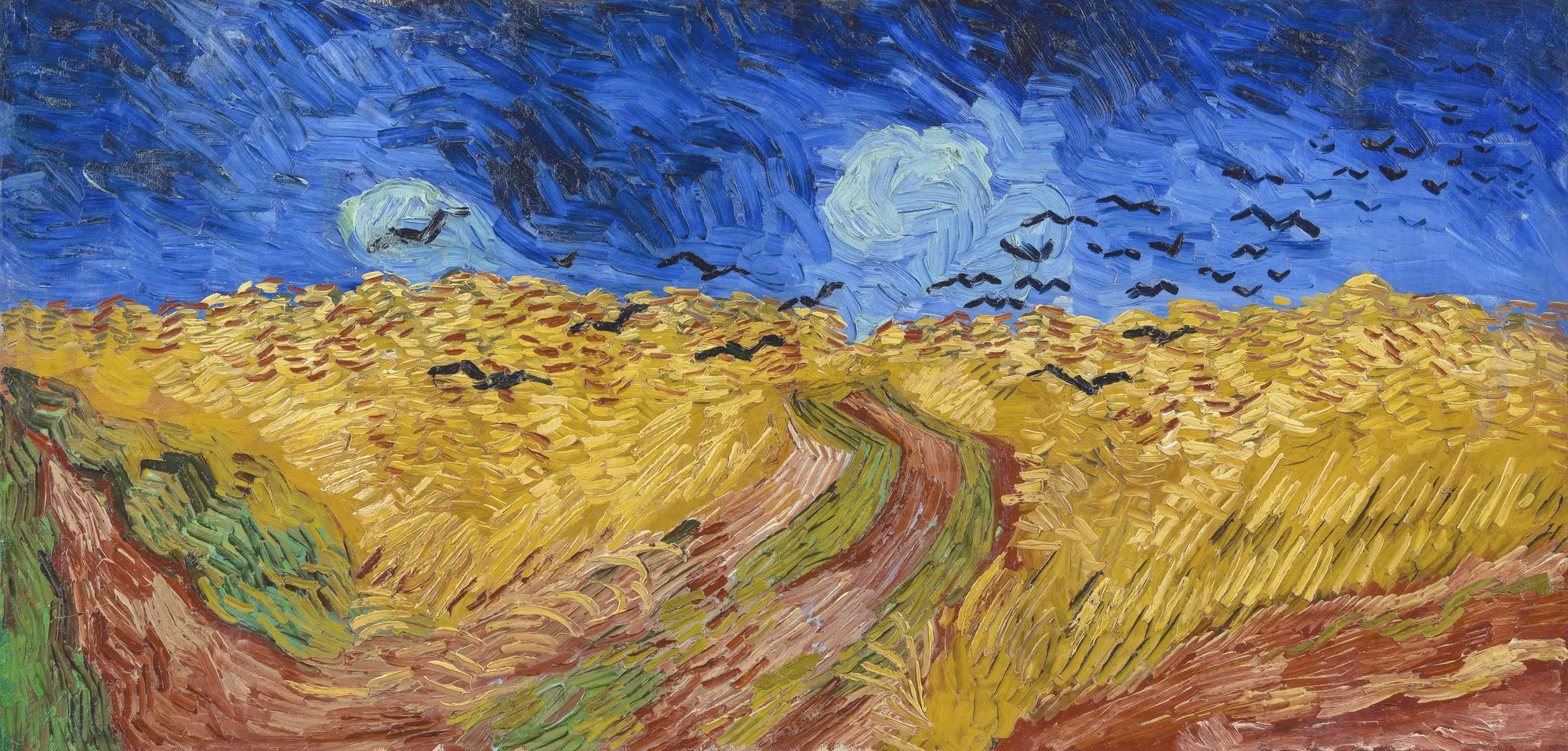
Vincent van Gogh, 'Wheatfield with Crows' (1890).
Vincent van Gogh, Wheatfield with Crows, 1890

This is an immersive, interactive, sensory experience. As you scroll, open the doors of your perception. Move slowly, look closely, turn the sound on. Allow it to guide you through the extraordinary, everyday, unconscious processes that allow us to make sense of, and survive, the world.

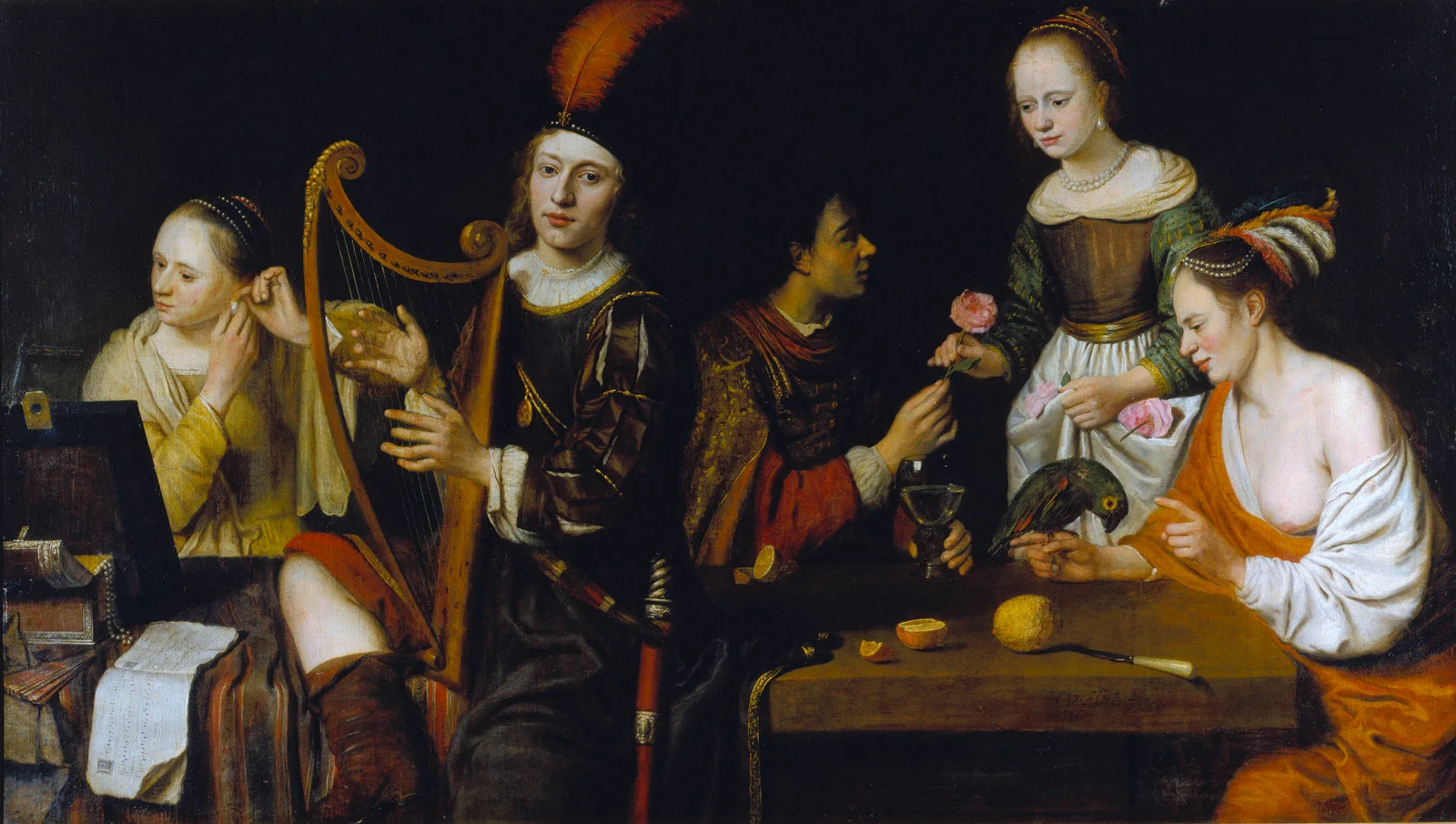
A Dutch Golden Age allegory of the five senses: figures play music, eat, drink and touch around a table.

It’s not that this world has had time and space from the very beginning, but rather human beings developed eyes and ears, and from that time and space were born.

— Yuji Ikegaya, Pharmaceutics Professor
Definition: Being Alive

Part 1. The Sensory World

Sensory Experience

Sensation vs.
Perception

What does it mean to sense something? Sensation and perception are two separate yet very closely related processes. Sensation refers to the process by which information about the physical world is obtained by our sensory receptors. Perception is the process by which the brain selects, organises, and interprets these sensations. In other words, senses are the physiological basis of perception. Although sensation caused by external stimuli is usually a necessary precursor to internal perception, our memories and associations are powerful enough to reverse the order, creating physiological sensation such as a shiver, familiar taste or smell.

Sensory receptors are specialised neurons that respond to specific types of stimuli. When sensory information is detected by a sensory receptor, sensation has occurred. For example, light that enters the eye causes chemical changes in cells that line the back of the eye. These cells relay messages in the form of action potentials to the central nervous system. The conversion from sensory stimulus energy to action potential is known as ‘transduction’.

Pay
Attention!

Attention is a crucial part of perception creation. Without this cognitive skill, the human brain would become overloaded by stimuli and unable to function properly. Directing our attention allows us to navigate our daily lives, by choosing which specific stimuli to focus on, while ignoring other irrelevant perceivable information. The ability to pay attention is critical in learning, performing complex tasks and keeping yourself safe from danger.

Attention can be defined within 2 broad categories — active and passive. Active attention is intentional and voluntary, involving directed effort and mental energy, such as listening to a friend in a noisy restaurant. Passive attention refers to stimuli that you notice regardless of your focus because they stand out, such as a sudden change in temperature, or a bang!

What Affects
the Process?

There are many factors that can have an effect on the sensation and perception processes. The unique way in which individuals receive and interpret sensory information is always biased. Switch on the filters you carry with you.

    0 filters active. You are seeing the world as it is.

    Differential threshold test

    Level 1 · Δ 40%

    One of these stars is a slightly different shade. Find it.

    Thresholds
    of Sensation

    The functioning of the senses is often divided into 3 thresholds. Testing the senses in these different levels can indicate whether they are functioning properly. The 3 levels are the absolute threshold, the differential threshold and the terminal threshold. The way you perceive things depends on the information your brain receives about your environment from the sensation process. Therefore, the functioning of your senses within the thresholds affects how you experience things after you feel, hear, see, smell and taste them.

    1.

    Absolute Threshold

    Although the sensory organs receive stimuli that are both strong and weak, they aren’t able to detect every environmental stimulus. When the intensity of stimuli is too low, you may not be able to hear, smell, see, taste or feel them. This is what is known as the absolute threshold of sensation. The absolute threshold differs from person to person. Below, the absolute threshold of each sense is illustrated, with stimuli that most people can detect 50% of the time.

    Somewhere on this horizon is a single candle, 50 km away. Search with your cursor.

    • Touch

      Feeling a bee’s wing falling a distance of 1 cm onto your skin.

    • Hearing

      Hearing a clock ticking indoors from 10 m away.

    • Sight

      Seeing a candle flame 50 km away on a clear night.

    • Smell

      Smelling a single drop of perfume in a 30 m² room.

    • Taste

      Tasting a teaspoon of sugar dissolved in 10 L of water.

    2.

    Differential Threshold

    Some stimuli are so similar that the difference between them is practically imperceptible. The minimal difference that a human can detect between 2 stimuli is called the differential threshold. This means that although two stimuli do in fact differ from each other, you might only feel, hear, see, smell or taste one thing. Take colours for example. Some shades are so alike that we perceive them as just one colour — the test above gets harder each time you find the odd one out, until your eyes simply cannot tell.

    3.

    Terminal Threshold

    Your senses constantly pick up stimuli, whether you like it or not. Mostly, this is hugely beneficial, but it can also have adverse effects. Sensation becomes painful and damaging when the intensity of the stimuli is too high. Light can be so bright as to hurt your eyes, or even blind you. An odour might be so vile and intense it causes physical illness, while your ears are easily damaged by exposure to loud noise. In most cases, these intense stimuli are detected and signalled to the brain quicker than any other stimuli. They take preference even if you attempt to focus on something else, ensuring you notice and react to them. The high volume of a smoke alarm causes a light amount of physical discomfort and pain, making sure that you give it your attention immediately, ultimately keeping you safe.

    The Nervous System

    The nervous system’s primary job is to receive information about the environment around us (sensation), as well as to generate a reaction to that information in the form of motor responses. The nervous system can be divided into regions that are responsible for sensation (sensory functions) and for the response (motor functions). But there is a third function that needs to be included. Sensory input must be integrated with other sensations, as well as with memories, emotional state, and cognition. Some regions of the nervous system are termed integration or association areas. The process of integration combines sensory perceptions and higher cognitive functions such as memories, learning, and emotion to produce a response.

    The human torso, arms and legs are served by 31 pairs of great spinal nerves rooted to either side of the spinal cord. They branch out into ever-finer subdivisions until their tips are single fibres, carrying information in the form of neural impulses back and forth between the brain and body. Performing complex tasks that involve fine motor skills, such as playing a guitar, requires coordinated effort between the brain and muscles. The player directs their fingers with neural impulses that begin in the cortex, travel down the spinal cord and nerve networks until the appropriate subsidiary nerves deliver them to each finger.

    0 / 31 nerve pairs

    A brain rendered in a rainbow gradient.

    Tap a sense to send a signal.

    A stream of raw sensation. Click each stage to see what your brain does with it.

    Forming a Perception

    The Intricate
    Art of
    Perception

    When psychology was young, it was widely assumed that a human’s picture of the external world was a tapestry of sensations, and that the study of sensation would lead to insight into much of the human mental life. Psychology today has come a long way from this simple proposition. It has found that humans do not merely sense the world, they interpret it. As the psychologists say, they perceive. For example, different sensations may lead to the same interpretation. A person may read a book with their eyes, while a blind person reads the same book with their fingers.

    ⠏⠑⠗⠉⠑⠊⠧⠑perceive

    Both perceive the same meaningful words. Even a simple stimulus may be dramatically misinterpreted, as evidenced by optical illusions. Today, psychologists are still interested in humankind’s grasp of the external world, but they are studying the many complicated ways in which the human brain masters the aimless flow of sensation through acts of attention, interprets it according to prior experience and needs, and perceives an intelligible world.

    Why Perception
    Matters

    The human ability to perceive is vital for survival. This cognitive skill allows humans to interpret, understand and interact with the world around them. As a cyclist races down a steep hill, her perception of depth, speed, motion, colour and sound allow her to avoid obstacles. Perception facilitates the uniquely human level of socialisation we thrive on; cooperation, competition and conflict. An international football match relies on perception shared and agreed on by millions globally. However, having witnessed identical stimuli, fans of opposing teams are likely to perceive the outcome significantly differently.

    Often, perception matters more than reality. If someone perceives something to be true, it is more important to them than whether it is in fact true or not. Many of our beliefs are not informed wholly by reality and objective truth, but rather are swayed by emotion, circumstance and experience. Despite their intelligence, human beings are highly susceptible to deception, bias and fallacy.

    The colours, shapes and light of road signs and traffic signals give us information important for our safety. Humans often associate the colour red with danger or ‘stop!’, and green with safety or ‘go!’

    The Process
    Explained

    The perception process is a sequence of steps that begins with receiving stimuli from the physical environment and ends with your interpretation of those stimuli. The 3 stages of perception formation are as follows:

    1. Selection

    You receive a huge amount of information from your environment through your 5 sensory organs: the eyes, ears, nose, tongue and skin. These correspond to the 5 basic ‘senses’; visual, auditory, olfactory, gustatory and tactile (in fact, there are 2 additional senses, and the sense). The sensory information is carried instantly to the brain by neurons, via the central nervous system.

    2. Organisation

    Many humans go through life unaware of the subtlety and range of their senses, since we need only a fraction of their data to perceive the world well enough for our everyday purposes. Yet we see and hear more than we think we do. Blind people experience a heightened sense of hearing and touch, making use of echoes and tactile intricacies that most disregard as distractions.

    The brain organises new, incoming information, disregarding what is deemed irrelevant. The important data is then compared and combined with similar information already stored as memories. By connecting familiar data with previous knowledge, the brain creates context. Without the cognitive ability to ‘pay attention’, the human brain would become overloaded and unable to function.

    3. Interpretation

    After the sensory information has been ordered, the brain applies a unique interpretation to it. This makes it meaningful and useful, turning it into something you can understand. This interpretation is based on a myriad of factors; your past experiences, assumptions, culture, personality, faith and present circumstance to name just a few. The interpretation stage is where perception is truly created, through mechanisms that science is only just beginning to comprehend.

    The word NEAR in outline, its perspective lines converging in a rainbow toward the word FAR.

    PERCEPTION CREATION

    An iridescent impossible shape.

    INFRONT

    GIGANTIC

    ☺☺☺☹☹☹

    THE ‘FUTURE’THE ‘PAST’

    Reversed

    behind

    Inverted

    An impossible ring of iridescent cubes.

    SIDEways

    An impossible interlocking shape.

    inout

    miniscule

    “Perception is the brain’s way of interpreting ambiguous visual signals in the most likely explanation possible. These explanations are a direct result of past experience.”

    — Gregory Berns, Iconoclast
    An arched gateway with stairs climbing to a glowing doorway.

    The doors of perception

    Every word does what it says. Hover them.

    Gestalt Principles

    History of
    Gestalt Theory

    The Gestalt Principles of human perception describe our exceptional ability to group similar elements, recognise patterns and simplify complex images when we perceive objects. In aiming to understand how we gain meaningful perceptions from chaotic stimuli, German psychologists Max Wertheimer, Kurt Koffka and Wolfgang Köhler developed the Gestalt (‘unified whole’) Principles in the 1920s. They identified a set of laws which address our compulsion to find order in disorder.

    Key Ideas Behind
    Gestalt Laws

    Koffka summarised Gestalt theory in saying, The whole is other than the sum of the parts. When human beings see a group of objects, we perceive their entirety before we see the individual objects. We see the whole as more than the sum of the parts, and even when the parts are entirely separate entities, we’ll look to group them as some whole. There are 4 key ideas that form the basis of Gestalt theory:

    Emergence is the process of forming complex patterns from simple rules. When attempting to identify an object, we first seek to identify its outline. We then match this outline pattern against shapes and objects we already know to find a match. Only after the whole emerges through this outline pattern matching, do we start to identify the parts that make up the whole. When designing, keep in mind that people will identify elements first by their general form. A simple, well defined object will communicate the idea more quickly and effectively than a detailed object with a hard to recognise contour.

    Reification is a perceptual phenomenon in which the object, when perceived, contains more spatial information than what is actually present. As we attempt to match what we see to familiar patterns we have stored in memory, there isn’t always an exact match. Instead, the brain finds a near match and then fills in the gaps of what we think we should see. Reification suggests that we don’t need to present the complete outline in order for viewers to see it. We can leave out parts of the outline as long as we provide enough of it to allow for a close enough pattern match. Reification forms the basis of the principle of closure.

    Multi-stability is the tendency of ambiguous perceptual experiences to move unstably back and forth between alternative interpretations. Some objects can be perceived in more than one way. The figure and ground principle example below is one you’ve likely seen before. The image can be seen as either two faces in profile or as a vase. You can’t see both at once. Instead you bounce back and forth quickly between the two stable alternatives. One will tend to be your dominant perception and the other will become more difficult to perceive the longer you go without seeing it.

    Invariance allows us to recognise simple objects independent of their rotation, translation and scale. Since we often encounter objects from different perspectives, we’ve developed an ability to recognise them despite their different appearance. Imagine if you could only recognise someone you knew if they stood directly in front of you and faced you, but not once they turned in profile. Despite different visual perspectives, we can still recognise people. You can see these ideas in play in the principles below. These principles speak to the core of human visual language, perception and communication.

    Law of Prägnanz

    Symmetry, good figure & simplicity. Reality is reduced to its simplest form. The Olympic logo looks like overlapping circles, not many complex shapes.

    Law of Closure

    When seeing a complex arrangement of elements, we tend to look for a single, recognisable pattern. You see a square rather than 4 ‘Pac-Man’ shapes.

    Law of Similarity

    We group similar things together based on colour, shape and size, regardless of their proximity to each other. Most of us separate these elements into columns of shapes.

    Law of Continuity

    Elements arranged on a line or curve are perceived to be more related than elements not on the line or curve. All written language relies on good continuation.

    Law of Common Fate

    People will group together things that point to or are moving in the same direction. We perceive a school of fish as a single stimulus, by grouping the individual elements.

    Law of Proximity

    Objects that are closer together are perceived as more related than objects that are further apart. Proximity can group or separate otherwise identical elements.

    Law of Figure & Ground

    Elements are perceived as either figure (the element in focus) or ground (the background). Rubin’s Vase is a classic example of an alternating figure ground.

    Law of Common Region

    Elements are perceived as part of a group if they are located within the same closed region. Although the elements are identical, we see 2 distinct groups.

    Hover each principle to break it.

    • Proximity
    • Common fate
    • Continuity
    • Similarity
    • Closure
    • Common region
    • Prägnanz

    Hold anywhere on the wall (or the space bar) to pay attention.

    Attention held: 0.0s

    Test Your Perception

    Prior
    Expectations
    Inform Ideas

    Have you ever gazed up at fluffy clouds floating in the blue summer sky, and suddenly a funny face or magical scene appears within them? Maybe you’ve been embarrassed to discover that the words you always sing along to a favourite song aren’t the lyrics at all, but rather a rhyme of your own creation. What’s happening here is your brain’s best guess at interpreting ambiguous sensory information. When prior beliefs mix with vague sensory evidence, the brain’s predictive machinery engages, attempting to apply meaning.

    Let’s Test
    It Out

    1. Step 1: Look at the image below. Can you see anything? Right now, it just looks like random splodges. Nothing is recognisable or meaningful.
    2. Step 2: Now, scratch it away. Rub the surface with your cursor or finger to reveal what lies beneath. Give it a good look for a few seconds.
    3. Step 3: Finally, press reset. Look at the splodges again. Do you notice anything different from the first time? Remarkably, you can still see the woman and the horse.
    A photograph of a woman in a cowboy hat kissing a horse on the nose.

    Predictive
    Perception

    What’s fascinating about this exercise is that the raw sensory information has not changed at all. The only thing that’s changed is your brain’s prior expectations, and these change what you consciously perceive. All perceptions are a kind of storytelling by the brain. Unless we can imagine something, we cannot perceive it.

    One way we can learn about how the brain implements predictive perception, is by putting people in brain scanners. Several studies now suggest that sensory signals come from the outside in, while perceptual predictions flow from the inside out.

    Every act of perception is to some degree an act of creation, and every act of memory is to some degree an act of imagination.

    — Oliver Sacks, Neurologist
    Musicophilia: Tales of Music and the Brain
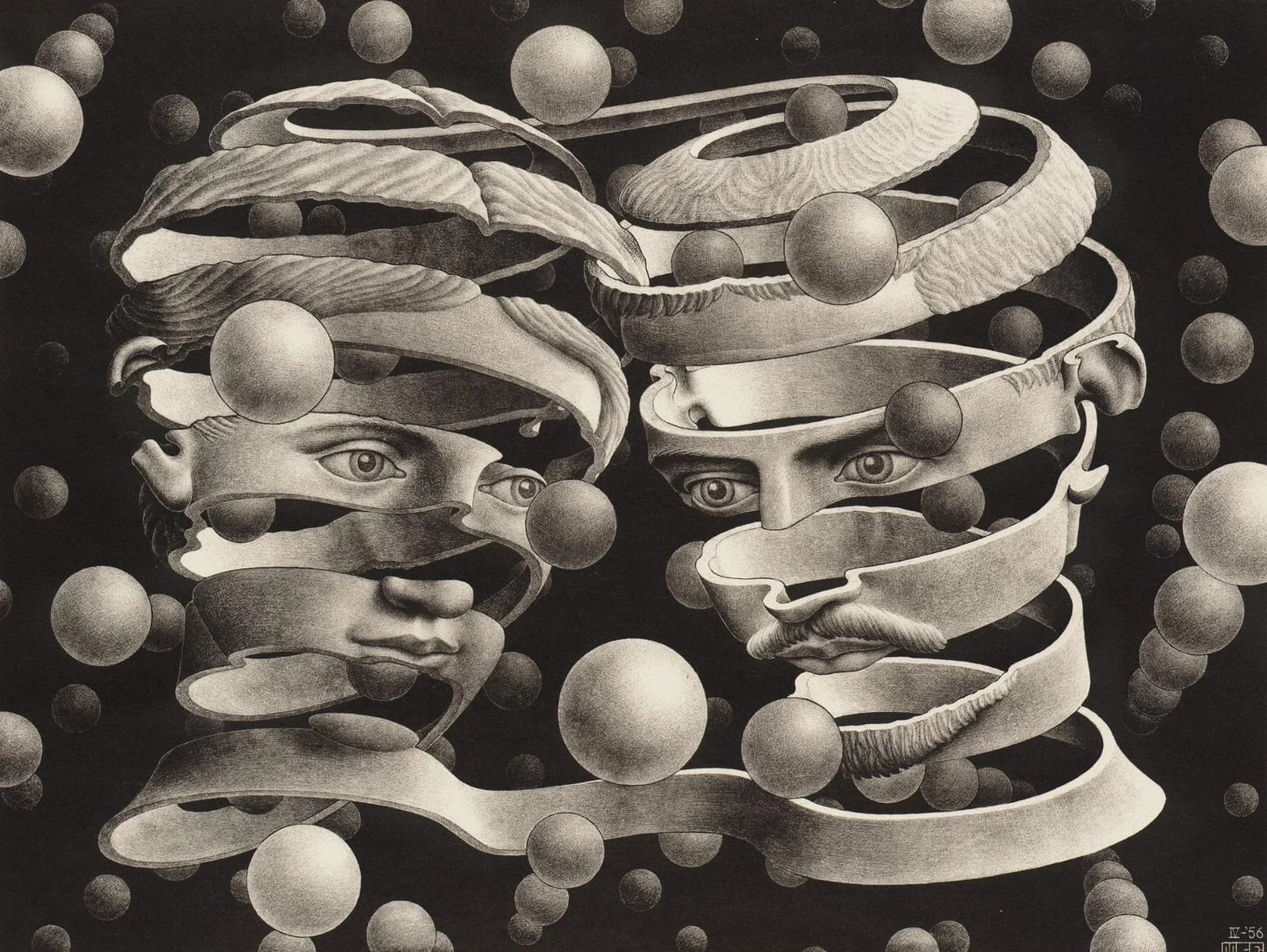
    M.C. Escher, 'Bond of Union' (1956): two heads made of unspooling ribbons, intertwined, floating among spheres.
    M.C. Escher, Bond of Union, 1956. © The M.C. Escher Company B.V. All rights reserved.

    Part 2. The Psychology of Perception

    Perception is Reality

    A Thought
    Experiment

    Perception is a remarkable phenomenon. Author Gregory Berns states in Iconoclast, “Perception is the brain’s way of interpreting ambiguous visual signals in the most likely explanation possible. These explanations are a direct result of past experience.” In short, perception equates to the sum of your past conditioning. In keeping with this idea, I invite you to participate in the following thought experiment to test this model.

    $

    “There’s never enough.”

    Suppose you are raised in a poor family with little material possessions to account for. Your constant concern for money leads you to adopt a scarcity mentality. Over time, you develop negative beliefs related to money, since your past was replete with evidence of money being in short supply.

    The same coin. The same stimulus. Two entirely different perceptions. The nature of living in a material world means our reality becomes the canvas upon which we make sense of our environment.

    Your Mind-
    Constructed
    Model

    Perception is based on our mind-constructed model of the world, such that life reflects our held beliefs and opinions. It is Stephen R. Covey who reminds us in The 7 Habits of Highly Effective People, “To change ourselves effectively, we first have to change our perceptions.” In a similar example, some people believe in the institution of marriage while others consider relationships to end in disillusionment or divorce. Yet, neither party is right nor wrong.

    Their perception is coloured by their experience of reality. Your life’s experiences give rise to a distorted view of the world, observed through your self-made filters. I mean that in the best possible sense. The filters we use to create reality are biased for several reasons, least of which affirms they are the product of our past.

    “To change ourselves effectively, we first have to change our perceptions.”

    “Minds are like parachutes; they work best when open.”

    Judgement
    Impairs
    Perception

    Legendary whisky distiller Thomas Dewar said, “Minds are like parachutes; they work best when open.” Thus, to appreciate reality and connect with the truth, it serves us well to consider opposing views and meet somewhere in the middle. Most people are quick to pass judgement before giving others the benefit of the doubt. On many occasions, they reference formed memories to construct inaccurate assessments of a situation.

    Reflect on a recent setting in which you were quick to jump to conclusions. You may have assumed you were right and the other party was wrong. Prejudice is an agent of perception. Preconceptions about race, gender, background and intelligence illustrate how our judgements impair our perception. Seldom do we have a detailed picture of a situation until we dig deeper.

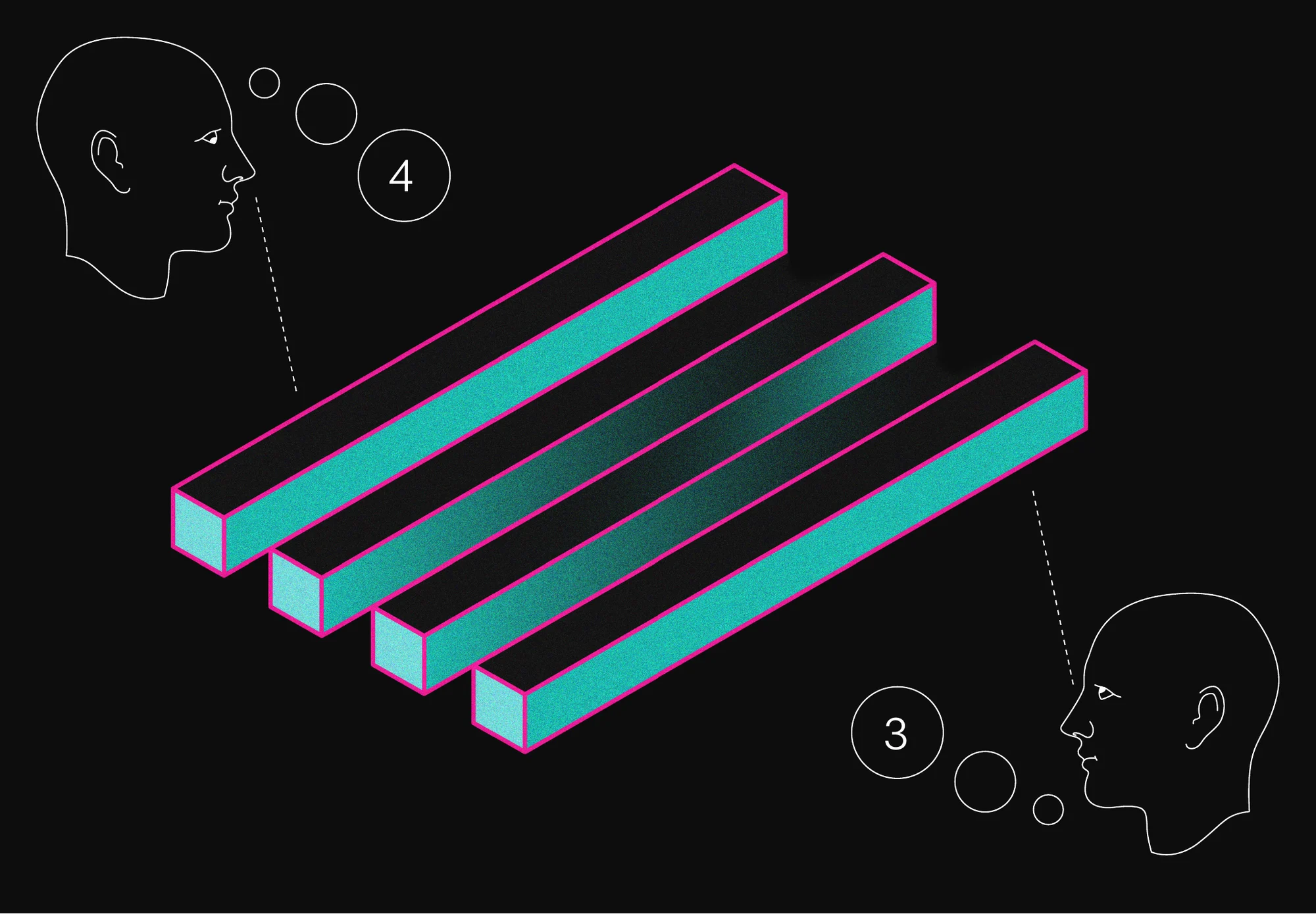
    Two heads look at an impossible set of bars: one thinks there are 4, the other thinks there are 3.

    Who’s right? Hover each head to see through their eyes.

    Be a
    Conscious
    Creator

    In his highly praised book, Influence: The Psychology of Persuasion, Robert B. Cialdini states, “Often we don’t realise that our attitude toward something has been influenced by the number of times we have been exposed to it in the past.” In presuming judgement, we call on biased memory to interpret the case at hand. Based on past reference, we often draw false conclusions, creating a perception which is far from the truth.

    This reinforces the need to suspend judgement, as we often bring our own bias to the moment. Being tolerant of others reinforces our own self-compassion and self-tolerance. We shape our reality by assuming a different filter in which to perceive life. When a situation arises which you are unfamiliar with, rather than add a narrative to it, consider the following viewpoint: “What else could be going on beneath the surface, that I am unaware of?” There is always something behind the scenes. If you are quick to cast aspersions, your experience of reality is limited.

    Relationships allow us to explore new ideas within a unique setting. In exploring and integrating those ideas we form new vistas upon which our reality expands. Your perception of reality will always be subject to past experiences and beliefs. To be aware and awake, you must become a conscious creator of your destiny, while appreciating that there will always be more than meets the eye in our existence.

    “What else could be going on beneath the surface?”

    Mysteries of the Mind

    The Mind-Body
    Problem

    The mind-body problem is a paradox — a group of propositions for each of which we have apparently sound arguments, yet the propositions taken together are inconsistent. We cannot affirm all the propositions in the group, yet we have good reason to believe they are all true. Among other questions, the mind-body problem can be taken to raise the issue of the physicality of the mind.

    While the brain is demonstrably physical, made of tangible matter, it is certainly hard to see how the same can be true of the mind, and with it consciousness. The human brain can be described as weighing roughly 1.3 kg, measuring around 15 cm long, and containing some 86 billion neurons. The ‘mind’ however, eludes any descriptions of this kind. Philosophers and scientists draw distinction between the hard problem and the easy problems of consciousness.

    The (relatively) easy problems refer to describing the physical processes of consciousness — understanding the mechanisms of the eyes, the ears, of touch, smell and taste. The hard problem lies in understanding how our experience of purely physical stimuli, such as a lit candle, results in the formation of an abstract, non-physical state of consciousness. From a logical point of view, the mind-body problem is easy to understand, and it can be expressed clearly, in just 4 propositions:

    Paradox

    All four feel true. They cannot all be true. Reject one to choose your philosophy.

    It is very difficult to deny any of these four propositions, but they cannot consistently be held to be true together. At least 1 of them must be false, and the attempt to show the exact way in which this plays out is the work of developing a solution to the mind-body problem.

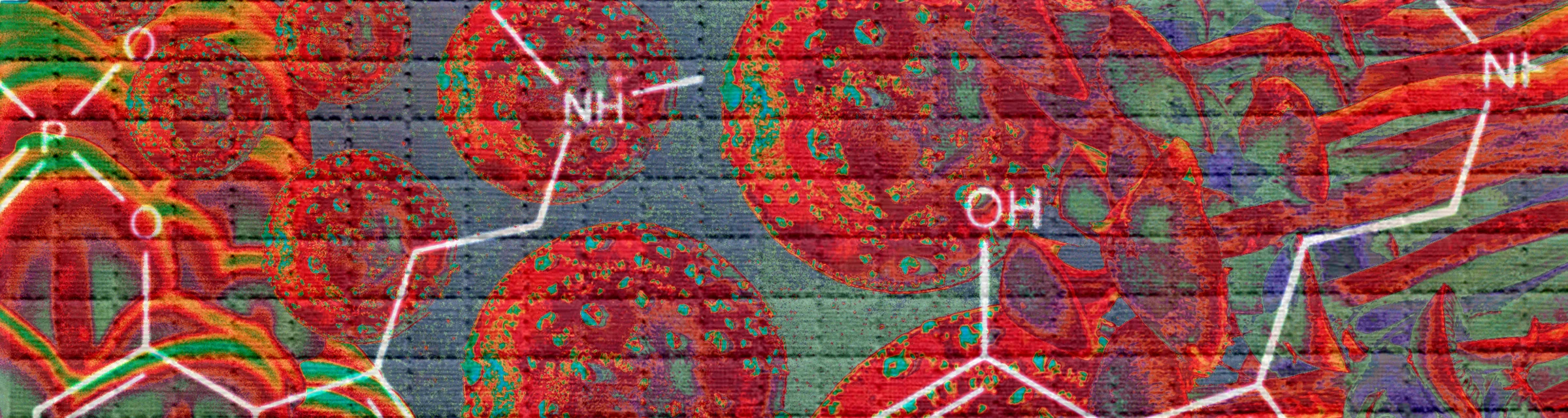
    A sheet of blotter paper printed with psilocybin and LSD molecules over psychedelic mushrooms.

    The Psychedelic
    Renaissance

    After decades of misinformation, demonisation and criminalisation, modern western medicine and culture is currently experiencing what is being described as a ‘psychedelic renaissance’. This paradigm shift is being led by a diverse range of neuroscientists, psychologists, biologists and enthusiastic psychonauts. They all share an excitement and hope in the potential of psychedelic, mind-altering substances and the hallucinations they induce in helping to reveal how the brain generates our perceptions of the world around us — and of ourselves.

    Anil Seth, a professor of cognitive and computational neuroscience at the University of Sussex, studies how the brain helps us to perceive the world within and without, and is intrigued by what psychedelics such as LSD and psilocybin can tell us about how the brain creates these perceptions. Seth’s self-experimentation with LSD and ayahuasca brought about a profound sense of well-being as he marvelled at the fluidity of time and space. Everything became imbued with a sense of vitality, life and vividness.

    His experiences strengthened his conviction that psychedelics have great potential for teaching us about the inner workings of the brain that give rise to our perceptions. New studies are beginning to provide support for a provocative hypothesis from over a century ago: that one of the fundamental functions of the brain — and the root of everything we perceive — is to make best guesses about the causes of information impinging on our senses at any given moment.

    A New Medical
    Paradigm

    Proponents of this idea argue that the brain’s powers of prediction enable it to find meaning in noisy and ambiguous sensory information, crucial in navigating the world around us. When these predictions go haywire, as they seem to under psychedelics, the perceptual aberrations provide neuroscientists with a way to probe the inner workings of the brain and better understand neuropsychological conditions that cause altered perceptions of reality, such as psychosis.

    According to Michael Pollan, “for most of the 1950s and early 1960s, many in the psychiatric establishment regarded LSD and psilocybin as wonder drugs” for treating depression, anxiety, trauma, and addiction, among other ailments. As these drugs came to be associated with the 1960s counterculture, ‘bad trips’ and psychotic breaks, “the exuberance surrounding these new drugs gave way to moral panic.” Now the pendulum is swinging back, and the interest in their usefulness as a tool to help treat a variety of psychiatric conditions is rapidly growing.

    Conclusion

    Thank You

    Lying at the intersection of neuroscience, psychology, biology, philosophy, spirituality and mysticism, the study of perception is a fascinating and constantly evolving field. Much about the human brain, and what we call consciousness, remains a mystery.

    An intellectual curiosity and hunger to learn about these fundamental aspects of the human experience empowers a greater sense of self-understanding, and ability to alter one’s own perceptions for the better. So, thank you for your interest and time in reading Perception Creation.

    Sources of
    Information

    The information in this book was gathered, collated and presented from a wide range of different sources. I acknowledge the most influential sources below.

    Show all 28 sources
    • How Perception Works — braingymmer.com
    • What is Perception? — mvorganizing.org
    • The Neuroscience of Perception: Anil Seth — Future of Storytelling, youtube.com
    • Anil Seth: How Does Your Brain Construct Your Conscious Reality? — npr.org
    • Sensation and Perception — lumenlearning.com
    • How Your Attention Works — braingymmer.com
    • Business Communication for Success: Perception — saylordotorg.github.io
    • This is How Perception Creates Your Reality — Tony Fahkry, mission.org
    • Forming a Perception — thepeakperformancecenter.com
    • How Our Minds Make Sense Through Order — University of Rochester
    • How Does the Human Brain Make Sense of the External World? — Fiona Newell, Research Case Studies, Trinity College Dublin
    • Exploring the Gestalt Principles of Design — Cameron Chapman, toptal.com
    • Gestalt Principles — interaction-design.org
    • Gestalt Principles of Visual Perception: Cognitive Psychology for UX — usertesting.com
    • Gestalt Laws of Perceptual Organization — Kendra Cherry, verywellmind.com
    • Design Principles: Visual Perception and The Principles Of Gestalt — Steven Bradley, smashingmagazine.com
    • Gestalt Principles Series — Andy Rutledge
    • Information—Consciousness—Reality — James B. Glattfelder
    • The Mind Body Problem — Jonathan Westphal, MIT Press Essential Knowledge Series
    • Self Comes to Mind: Constructing the Conscious Brain — Antonio Damasio
    • The Doors of Perception & Heaven and Hell — Aldous Huxley
    • A Beginner’s Guide to Reality — Jim Baggott
    • Art, Science and the Paradoxes of Perception — Robert Pepperell, The Conversation
    • Psychedelics Open a New Window on the Mechanisms of Perception — Anil Ananthaswamy, knowablemagazine.org
    • Basic Structure and Function of the Nervous System — lumenlearning.com
    • The Mind (Life Science Library) — John Rowan Wilson
    • Sometimes, Perceptions Matter More Than Reality — Ryan Fan, Invisible Illness
    • Back to the Future: Psychedelic Drugs in Psychiatry — Dr. Peter Grinspoon, Harvard

    The artworks and photographs reproduced here are the work of their respective artists and photographers, and all rights remain with them — including Edvard Munch, Vampire (1894); Vincent van Gogh, Wheatfield with Crows (1890); and M.C. Escher, Bond of Union (1956), © The M.C. Escher Company B.V. This is a non-commercial creative project.

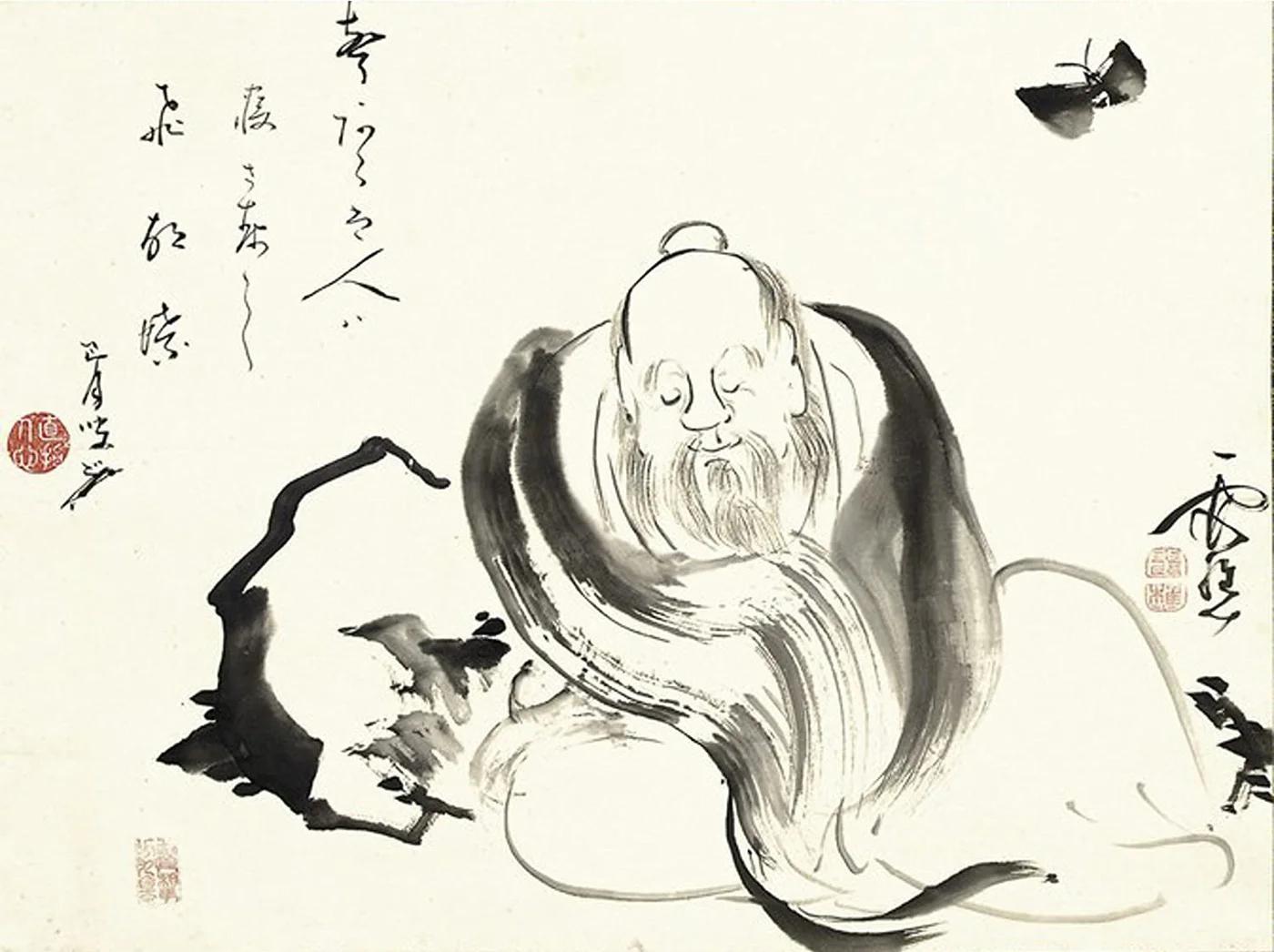
    An ink painting of Zhuangzi sleeping, a butterfly above him, with calligraphy.

    Once upon a time, I dreamt I was a butterfly, fluttering hither and thither, to all intents and purposes a butterfly. I was conscious only of my happiness as a butterfly, unaware that I was myself. Soon, I awakened, and there I was, veritably myself again. Now I do not know whether I was then a man dreaming I was a butterfly, or whether I am now a butterfly, dreaming I am a man.

    — Master Zhuang Zhou, Daoist Philosopher
    The Zhuangzi

    PERCEPTION
    CREATION

    Written, collated & designed by Liam Strickland

    Print edition 2021 · Web edition 2026
    Everything you just saw was, in part, created by you.

    Begin again ↺